Last One to the Orange Julius: The Devoted Weirdos Keeping America's Dead Malls on Life Support
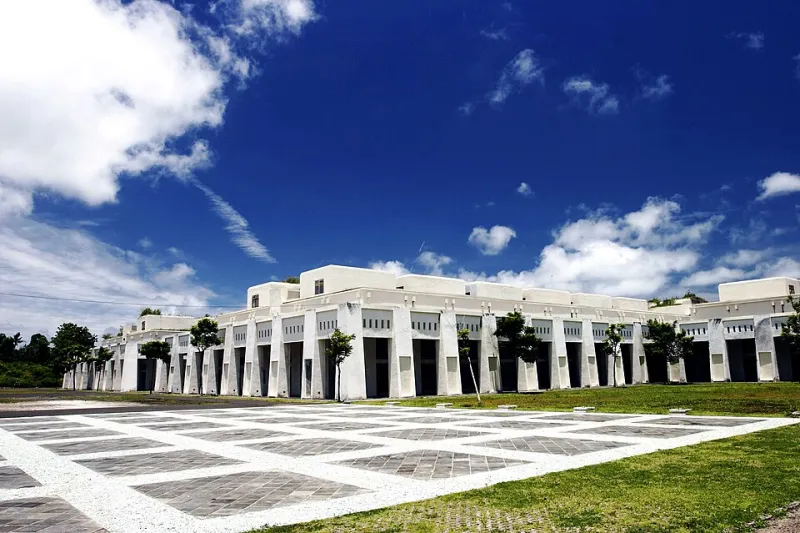
Photo: Krismartin at en.wikipedia, Public domain, via Wikimedia Commons
At 6:58 on a Tuesday morning, the doors of the Maplecrest Galleria open for the walkers, and the walkers arrive like it's a religious obligation. Which, honestly, it might be.
There are maybe thirty of them on a good day. They move in a counterclockwise current past the darkened Bath & Body Works, past the fountain that stopped flowing in 2019, past the skylights that pour clean morning light onto terrazzo floors that haven't seen a crowd since the second Obama administration. They walk. They gossip. They know which section of ceiling leaks and they simply... adjust.
Welcome to the food court era of American retail, where the malls are dying but the mall people refuse to.
The Third Place Has a Sbarro Problem
Sociologists talk about the "third place" — the spot that's neither home nor work, where community actually happens. The church basement. The barbershop. The bar. For a solid forty years, the answer for millions of Americans was the mall, ideally near a soft pretzel.
Then the internet ate retail, anchor stores started leaving like it was a fire drill, and suddenly we're a nation of people who get our community in comment sections. Except not everyone. Not the walkers. Not the teenagers who discovered that a dying mall is the last place a 15-year-old can exist in public without buying anything. Not the guy who sets up his chess board by the defunct KB Toys every Saturday and will absolutely teach your kid the Sicilian Defense if you make eye contact.
A dead mall, it turns out, is a terrible store and an incredible public square. The rent's already sunk. The security guard has nothing to do but be nice to you. The air conditioning is unbelievable in July.
The Walkers Rise Again
The mall walker is a folk hero of the retail apocalypse. Ask any of them why they're here instead of, say, a park, and you'll get a beautiful answer about the weather, the benches, the bathroom access, and — this is the key detail — the loop. The perfect, measurable, climate-controlled loop. Half a mile, end to end. No mud, no dogs, no guy on a bike yelling at pedestrians.
There's a hierarchy, naturally. The fast walkers do the upper level. The social walkers take the lower and stop at whatever kiosk is still legally a business. Everyone waves at Dot. Dot has been walking this mall since 1987 and has opinions about every store that's ever closed, which is all of them.
"The mall didn't leave me," Dot told us, mid-lap, "I'm just waiting for it to admit it."
The Photographers in the Peeling Wild
Then there's a second tribe, one that arrived after the fall: the dead mall photographers. They come with wide-angle lenses and a reverence usually reserved for cathedrals, documenting every faded food court logo, every fountains-and-neon rendering of the future that 1988 promised and 2024 foreclosed on.
Whole online communities catalog this stuff — the collapsed ceilings, the zodiac-pattern tile, the sad single open pretzel place glowing like a beacon in a food court built for twelve. There's something genuinely moving about it. These photographers aren't mocking the mall. They're doing what people have always done with ruins: finding the beauty and the warning in it.
The mall managers, bless them, mostly tolerate it. One told us the photography crowd "keeps the place feeling alive," which is the most hopeful sentence ever uttered about a mall with four tenants and a Sprint store.
Long Live the Food Court
Here's the thing nobody predicts: the teens and the retirees and the chess guy all end up at the same table. The food court — even one with a single functioning vendor — remains the great equalizer, the place where a 78-year-old speed walker and a 16-year-old with nowhere else to go can share a table, a charging outlet, and a mutual hatred of the mall's one working radio station.
Developers keep announcing plans to turn these places into "mixed-use lifestyle centers," and some of them will be lovely. But they will not have a Dot. They will not have a loop. They will not have the particular magic of a community that chose a half-dead building and decided, collectively, to keep showing up.
So if there's a struggling mall near you, go. Walk the loop. Buy something from the last pretzel place. Sit by the dry fountain and enjoy the acoustics of a building that was designed for thousands and currently holds eleven.
The escalators are still running. Mostly. Might as well ride them.