Who Pays for Netflix Now? The Surprisingly Messy Ethics of the Password Crackdown
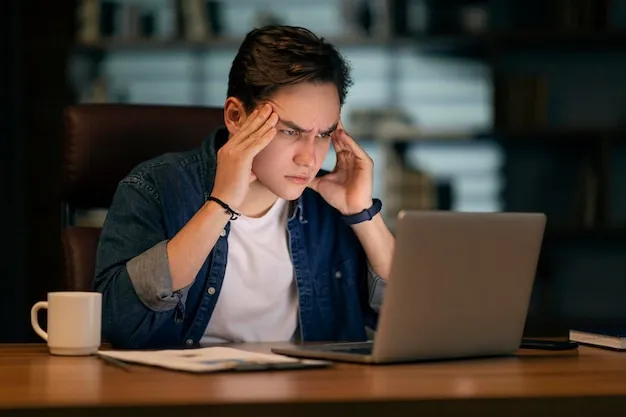
Photo: person looking stressed at laptop with streaming service login screen, via img.freepik.com
For roughly a decade, sharing a streaming login was basically a love language. Handing over your Netflix password was the digital equivalent of giving someone a key to your apartment — intimate, trusting, and absolutely not something you'd do for just anyone. Your college roommate had it. Your mom had it. That one guy from your old job named Derek had it, and honestly you're not even sure how Derek got it, but there he was, presumably watching Ozark on your dime every Thursday night.
Then the streaming giants looked at their subscriber numbers, looked at their stock prices, looked at Derek, and said: enough.
The password crackdown is real, it is ongoing, and it has unleashed a level of interpersonal chaos that no one in Silicon Valley apparently saw coming.
From 'Obviously Share It' to 'Wait, Is This Illegal Now?'
For years, password sharing existed in a comfortable ethical gray zone — the kind of gray zone where everyone kind of knew it was against the Terms of Service but nobody cared, including the streaming companies themselves. Netflix, Hulu, and their kin were in growth mode. Every eyeball on the platform was a potential future subscriber. Sharing was practically marketing.
Then the growth slowed. The pandemic boom faded. Suddenly those 100 million-plus households sharing passwords weren't charming little brand ambassadors anymore — they were a revenue leak the size of the Grand Canyon.
Netflix fired the first major shot in 2023, rolling out paid sharing in the US and making it very clear that your account living in one "household" was no longer a loose suggestion. The other platforms followed suit in various flavors of passive-aggression. And just like that, a generation of Americans had to confront a question they'd never expected to face: Is giving my sister my HBO password... wrong now?
The answer, legally and contractually, is yes. The answer emotionally, socially, and in terms of family dinner conversation, is considerably more complicated.
The Awkward Conversations Nobody Was Ready For
Ask around and you'll find that the password purge has generated some genuinely spectacular social fallout.
One woman in Austin, Texas — we'll call her Jenna because she asked us to call her Jenna — described getting a frantic text from her mother after Netflix booted her off the account. "She texted me 'I CANT GET INTO NETFLIX' in all caps at 11 PM," Jenna said. "Like I had personally stolen something from her. She'd been using my login for four years. Four years! I didn't even know she watched Netflix."
Jenna's solution: she added her mom as a paid extra member on her account. Her mother has since informed her that the interface "looks different now" and she doesn't like it.
Then there's the friendship angle, which gets even thornier. Unlike family — where there's at least an implied obligation to absorb the awkwardness — friendships don't come with the same contractual weirdness tolerance. Several people interviewed for this piece described quietly removing friends from their accounts and then enduring weeks of plausible deniability. "I just said Netflix must have detected something," admitted one guy in Chicago. "I couldn't handle the conversation."
The most dramatic scenario, however, involves exes. Multiple people have reported the deeply specific horror of realizing their former partner is still on their account — watching their recommendations, polluting their algorithm, possibly judging their rewatching of The Office for the seventh time. One woman in New York said she kept her ex on her Hulu account for eight months after their breakup because, and this is a direct quote, "I didn't want him to think I was thinking about him."
The platforms, inadvertently, became the breakup mediators nobody asked for.
The New Moral Calculus of the Living Room
What's fascinating — and a little absurd — is how quickly people internalized the crackdown as a genuine moral issue rather than just a policy change. Password sharing went from "everyone does it, it's fine" to "I feel vaguely criminal" in the span of about eighteen months.
This shift says something interesting about how we process corporate rule changes. When the Terms of Service were never enforced, they didn't feel real. Now that there are actual consequences — extra charges, account lockouts, the dreaded verification text — suddenly people are experiencing something weirdly close to guilt.
Streaming companies, to their credit (or their shame, depending on your perspective), have leaned into this framing. The messaging around paid sharing is carefully designed to feel less like "we're charging you more" and more like "you've been doing something slightly wrong and here's a graceful way to fix it." It's masterful corporate judo.
So Who Actually Pays?
Here's where it gets genuinely interesting from a cultural standpoint: the crackdown has forced households and friend groups to have explicit conversations about value, fairness, and who exactly has been benefiting from whose generosity. These are conversations Americans are, historically, extremely bad at having.
Some families have formalized arrangements — splitting a premium plan, Venmo-ing the account holder monthly, treating it like a utility bill. Others have had the far more American response of just quietly subscribing to their own accounts while pretending the previous arrangement never existed.
And a not-insignificant number of people have simply... cancelled. The password crackdown, in a delicious irony, accelerated the very subscriber churn the platforms were trying to prevent. If you can't share with your sister, and you only watched it for Stranger Things anyway, why are you paying $22.99 a month?
The streaming wars have entered a new phase — one where the battlefield isn't just about content anymore, but about the social fabric woven around the content. And somewhere out there, Derek is finally paying for his own account.
Good for Derek.