Discs Are Back, Baby: The Gleefully Petty Reason Americans Are Hoarding DVDs Again
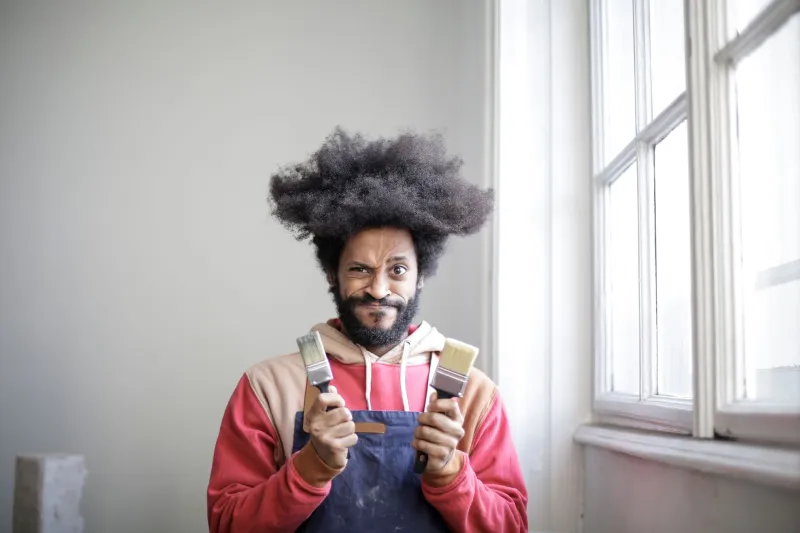
Somewhere in suburban Columbus, Ohio, a 31-year-old named Derek has a problem. Not a bad problem, exactly — more of a very specific, very intentional problem that takes up three full shelving units in his living room and roughly $600 of his annual disposable income. Derek collects DVDs and Blu-rays. Enthusiastically. Unapologetically. And he will absolutely tell you why.
"I logged into Netflix one night to finish The Office rewatch I'd been doing for, like, the fourth time," he says, "and it was just gone. No warning. No email. Just gone. That was my breaking point."
Derek is not alone. Across the country, a quietly growing movement of millennials and younger Gen Xers are doing something that would have seemed absolutely deranged five years ago: they're buying physical media again. DVDs. Blu-rays. Even, in some truly committed cases, LaserDiscs. They're haunting thrift stores, raiding library sales, and gleefully rebuilding the kind of personal libraries that their parents donated to Goodwill sometime around 2012 when streaming felt like the future.
The future, it turns out, has terms and conditions.
The Streaming Betrayal Is Real and It Has a Name
To understand why people are retreating to physical discs, you have to understand just how thoroughly streaming has broken its promise. The original pitch was elegant: pay a flat monthly fee, access virtually everything ever made, never worry about owning anything again. It was the Marie Kondo of entertainment — declutter your life, trust the cloud.
Except the cloud, as it turns out, doesn't actually care about you.
Licensing agreements expire. Studios pull content to launch their own competing services. Films vanish from one platform only to reappear on another one you don't subscribe to, at a price point that somehow costs more than just buying the Blu-ray outright. The average American household now juggles four or five streaming subscriptions, spending upwards of $70 a month, and still occasionally can't find what they want to watch on a Friday night.
And then came the password crackdowns. Netflix's 2023 crackdown on account sharing sent shockwaves through households across America — and sent a not-insignificant number of people straight to their local thrift store.
"I looked at what I was spending," says Mara, a 28-year-old in Portland who now owns over 400 discs, "and I realized I was renting access to things I loved. The moment I stopped paying, they were gone. That felt insane to me. So I just... started buying."
The Thrift Store Is the New Record Shop
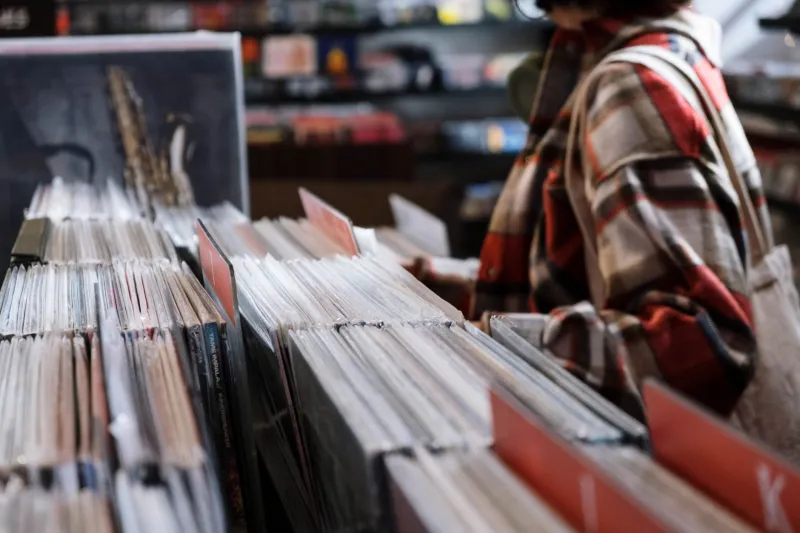
Here's the thing nobody tells you about the physical media revival: it's genuinely, absurdly fun. Collectors describe the thrift store hunt with the same breathless energy that vinyl enthusiasts bring to crate-digging at a record shop. You never know what you're going to find. A pristine copy of a 2003 action movie you've been meaning to revisit. A Criterion Collection edition of something that would cost $40 new, sitting on a shelf for $1.99 because someone's mom didn't know what it was.
Goodwill has quietly become a treasure map. Library sales are underground goldmines. Facebook Marketplace listings for "moving, selling everything" are treated with the reverence of a rare auction.
"I found a sealed copy of the extended Lord of the Rings trilogy box set at an estate sale for eight dollars," says Tom, a 34-year-old in Denver who runs a small physical media appreciation account online. "Eight dollars. That thing retails for sixty. I genuinely felt like I'd won something."
This is the part Silicon Valley didn't account for: the tactile, dopamine-soaked pleasure of ownership. Holding a case. Reading liner notes. Knowing that the thing on your shelf will play in ten years regardless of whether some executive decides to restructure their content library.
It's Not Nostalgia. It's Spite. (Mostly.)
Let's be honest about something — and the collectors themselves will be the first to admit it. Part of this movement is pure, petty, deeply satisfying spite.
Streaming companies spent years training us to think ownership was unnecessary, even a little uncool. Why clutter your space when everything lives in the cloud? And then they spent the next decade quietly demonstrating that "the cloud" is actually just a rotating door of licensing deals managed by corporations with no particular loyalty to your watchlist.
Building a physical media collection in 2024 is, on some level, a middle finger to that entire philosophy. It says: I know what I like, I own it completely, and no quarterly earnings call can take it away from me.
"There's something genuinely radical about it," Mara says, laughing. "Like, my copy of Paddington 2 is mine. Forever. HBO Max can't un-release it."
(For the record: HBO Max did briefly remove Paddington 2 from its catalog. The collectors noticed. The collectors were vindicated.)
The Unexpected Aesthetic Upgrade
Beyond the politics of it, there's a visual appeal to physical media that streaming absolutely cannot replicate. A well-curated shelf of Blu-rays is, objectively, a personality. It tells visitors what you care about. It invites conversation. It's a three-dimensional expression of taste in a way that a streaming watchlist — hidden behind a login screen, invisible to guests — simply isn't.
Interior design accounts have started noticing. "Shelfie" culture, long dominated by books and vinyl records, has quietly expanded to include rows of sleek Blu-ray cases. Collectors are organizing by director, by decade, by color — the same obsessive curatorial energy that drives any good collection.
Tom has his shelved alphabetically within genres, with a dedicated section for Criterion Collection releases that he refers to, without a trace of irony, as "the good neighborhood."
So, Is This a Movement or a Moment?
Physical media sales have been declining for years — that's not in dispute. But within that overall decline, there's a fascinating counter-current. Boutique labels like Criterion, Shout Factory, and Arrow Video are thriving. Certain Blu-ray releases sell out instantly and flip on eBay for triple their retail price. Disc players are back on holiday wish lists.
It's not going to dethrone streaming. Nobody's pretending otherwise. But it doesn't need to. This isn't about winning a format war — that ship sailed in 2010. This is about something quieter and more personal: the reclamation of a relationship with entertainment that feels stable, tactile, and entirely your own.
Derek, back in Columbus, puts it simply. "Every time I hear about another streaming service raising its prices or removing something people loved, I just look at my shelf and feel genuinely calm." He pauses. "Is that weird?"
At Faunglada, we'd say that's not weird at all. That's the most rational response to the past decade of streaming chaos we've ever heard. Now if you'll excuse us, we have a Goodwill to visit.