Miracle on Page Four: How the Family Holiday Newsletter Became America's Glossiest Work of Speculative Fiction
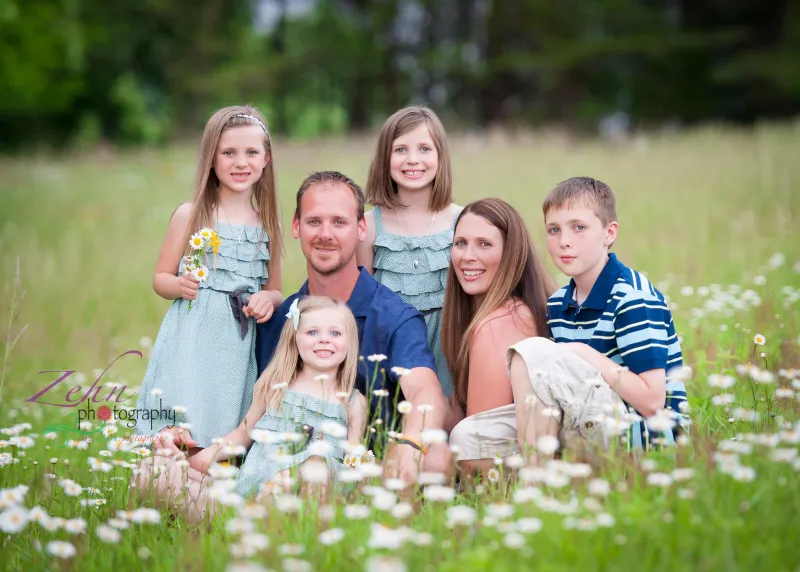
Photo: family holiday newsletter printed on table with Christmas cards, via i.pinimg.com
By late November 2026, the annual family holiday newsletter has achieved something remarkable: it is no longer a letter. It is a genre. It arrives in the mailbox between a utility bill and a catalog for a store that may not exist, printed on paper heavy enough to survive a dishwasher cycle, and it begins with a cheerful sentence that functions as a disclaimer: 'We're fine, thanks.'
That sentence is doing a lot of work. It is the literary equivalent of holding up both hands and saying, 'Please do not ask follow-up questions.' What follows is usually a single-spaced account of a year in which every soccer tournament was character-building, every home renovation was a journey, and every child has either been accepted into a gifted program or invented a new app.
A Genre With Rules
The holiday newsletter has conventions as rigid as any superhero movie. There is the opening weather report, which is always either unseasonably warm or a charming blizzard. There is the travelogue, in which a rental car becomes a metaphor for family resilience. There is the child update, which must include at least one achievement that sounds like a footnote in a doctoral thesis. There is the pet, who has either learned a trick or developed a personality.
And there is the closer: a warm wish for the new year, often accompanied by a photo of everyone in matching sweaters, looking as if they have never once argued over whose turn it is to unload the dishwasher. This is not deception, exactly. It is editing. It is the same instinct that makes us clean the house before guests arrive, except the guests are 120 people we haven't seen since college.
The Cast: Every Child Is a Luminary
In the holiday newsletter, children do not simply play sports. They 'discover a passion for lacrosse.' They do not get a B in chemistry. They 'continue to thrive in the sciences.' They do not refuse to eat vegetables. They are 'exploring a plant-forward palate.' The newsletter is where ordinary adolescence goes to get a publicist.
This is the part that recipients find most irresistible. We all know that the child in question is probably a delightful chaos agent who once tried to microwave a fork. But the newsletter insists on the myth. It gives the kid a role in the family epic. It makes the year feel like it had a plot.
The Vacations That Changed Everything
No newsletter is complete without a vacation that was not merely fun but transformative. A week at a lake house becomes 'a reset for the whole family.' A trip to see relatives becomes 'a beautiful reminder of what matters.' A delayed flight becomes 'an unexpected adventure in airport cuisine.'
The language is so relentlessly positive that it starts to feel like a challenge. Can anything bad happen in the newsletter universe? Occasionally, yes, but it is always handled with a breezy pivot: 'We had a small hiccup with the roof, but it gave us a chance to reconnect with our contractor.' In the newsletter, even a plumbing disaster is a team-building exercise.
What Recipients Actually Do
Here is the secret: people read these things closely. Maybe not in the way the sender hopes. They read them the way you read a friend's overly polished social media post: with affection, curiosity, and a magnifying glass. The newsletter is a puzzle. What is not being said? Why is Cousin Greg mentioned only in the final paragraph? What exactly happened in Tampa?
Recipients also compare notes. There is a quiet holiday tradition in which friends text each other photos of the most elaborate newsletters and ask, 'Did you get this one?' It is not mean, mostly. It is a shared appreciation for the form's sheer audacity. The newsletter is a performance, and we are all in the audience, holding a mug of cocoa and whispering.
The Affection Beneath the Gloss
It would be easy to mock the holiday newsletter as a festival of humblebragging. But that misses why people still send them. A newsletter is a small bid for continuity. It says: we are still here, the kids are still growing, we still remember you. In a fragmented country, that is not nothing. It is a paper thread across the distance.
Yes, the prose is sparkling. Yes, the vacation was probably not as transformative as advertised. But the impulse is sweet: to gather a year, smooth its edges, and send it out with a stamp. The holiday newsletter is America's most aggressive form of fiction, but it is also a love letter to the people we refuse to lose touch with.
The 2026 Dispatch
This year, expect more newsletters about 'slow living,' more children who have 'discovered a passion for pickleball,' and at least one family that has renamed their kitchen remodel 'Project Hygge.' Read them with kindness. Read them with a little skepticism. But read them. Somewhere on page four, between the soccer update and the recipe for a casserole no one requested, there is a person trying to say: we were here this year. We thought of you.