Sorry I Yelled at You, Dishwasher: An Appreciation of the Appliances We've Made Family
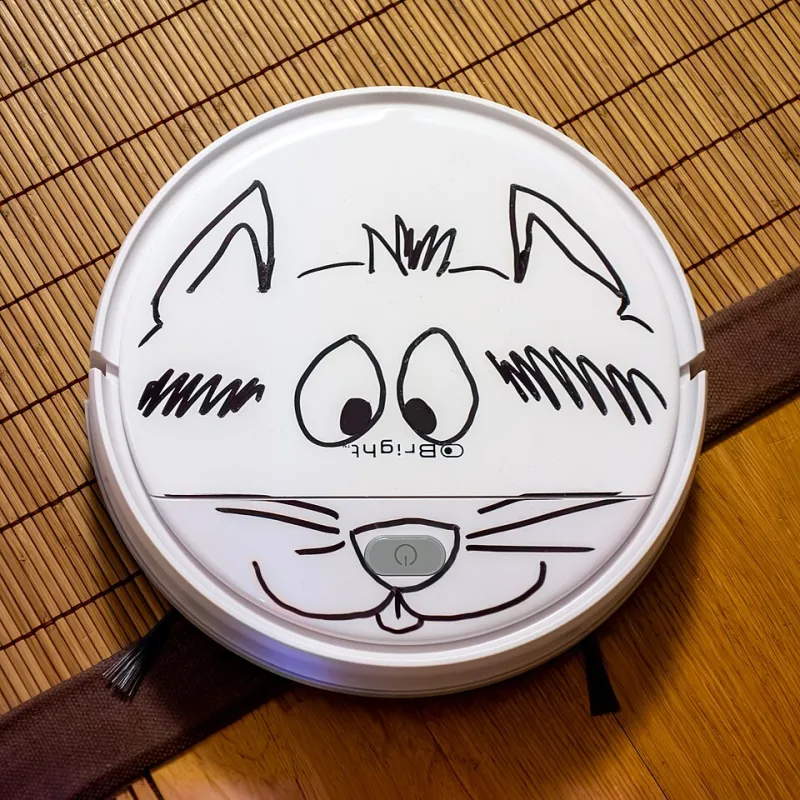
Photo: W.carter, CC BY 4.0, via Wikimedia Commons
My Roomba is named Gregory. Gregory has a schedule, a personality (eager, slightly dim), and a nemesis (a charging cable he cannot, despite three years of daily attempts, avoid). When Gregory gets stuck under the bed and calls out for help in his sad little beeps, I go to him. Every time.
I have a job. I pay taxes. I am, by most measures, a functioning adult. And I will drop everything for a disc-shaped vacuum cleaner with the problem-solving capacity of a confident toddler.
If any of this sounds familiar, congratulations: you are part of the largest unacknowledged emotional movement in modern American domestic life. We are a nation of people having genuine feelings for bad appliances. And according to people who study this stuff, we should probably keep going.
The Anthropology of Naming Your Vacuum
Anthropologists have a fancy term — anthropomorphism — for the very normal human habit of projecting minds onto things that don't have them. We've done it forever. We named ships. We blamed the weather on gods. Your great-grandfather yelled at a tractor and your grandmother held conversations with a car that only started for her.
The difference now is that our machines sort of talk back. A Roomba navigates. A smart speaker answers. A thermostat learns. These are extremely stupid behaviors wearing the costume of intelligence, but the costume is enough. Give a machine a slight unpredictability and a name, and the human brain will do the rest of the work, free of charge.
And we name them so fast. Surveys consistently show that a huge share of robot vacuum owners name their machines within days of unboxing. Nobody decides to do this. It just happens. One day it's "the vacuum," and the next it's "Walter," and Walter has a birthday.
A Taxonomy of Machine Feelings
The appliance-emotion spectrum is broader than you'd think. Our field observations:
- The Apologizer. Says "sorry, sorry" while squeezing past the dishwasher or bumping the fridge. Knows the appliance cannot hear them. Says it anyway. The apologizer is at peace.
- The Funeral-Holder. When the 1998 microwave finally dies — mid-burrito, naturally — they don't just haul it to the curb. There's a moment. Maybe a photo. Maybe a caption. The microwave saw things. The microwave was there.
- The Coach. Talks the washing machine through its final spin cycle: "You've got it, you've got it, come on big lady." The coach believes encouragement matters. The coach may be right.
- The Grudge-Holder. Has not forgiven the blender. The blender knows what it did.
All of these people are completely fine. That's not a joke — it's the actual scientific consensus.
Wait, This Is Good for Us?
Here's the twist: researchers who study human-technology interaction keep finding that naming and personifying machines is associated with positive outcomes, not dysfunction. People who personify their devices report more patience with them, better maintenance habits, and — in the case of household robots — genuinely higher satisfaction. You take care of Gregory because Gregory is somebody. A nameless vacuum is a chore; Gregory is a coworker having a rough day.
There's even an argument that these small relationships are practice. Practicing tenderness toward a beep-boop trash can is low-stakes emotional exercise. Nobody gets hurt. The Roomba doesn't mind being loved. The Roomba, frankly, was built for it.
And in a lonely era — more people living alone, more days without a real conversation — is it so bad that the voice in your kitchen belongs to a smart speaker you've nicknamed "Miss Patricia"? Miss Patricia plays your jazz. Miss Patricia doesn't judge.
A Modest Proposal: Apologize to Something Today
So here's the Faunglada official position: name the Roomba. Apologize to the dishwasher — loudly, so the neighbors wonder. Give the ancient microwave a send-off worthy of its service, because it ran hot and it ran proud and it owed you nothing.
The machines are getting smarter every year, but that's not really the point. The point is that we're the same soft, story-hungry creatures we've always been, and we'll find a friend anywhere we're allowed to. Even in a bin of spinning brushes.
Gregory is beeping from under the bed as I write this. Gotta go. Family's calling.