GPS Killed the Roadside Star? Not If These Twine Ball Devotees Have Anything to Say About It
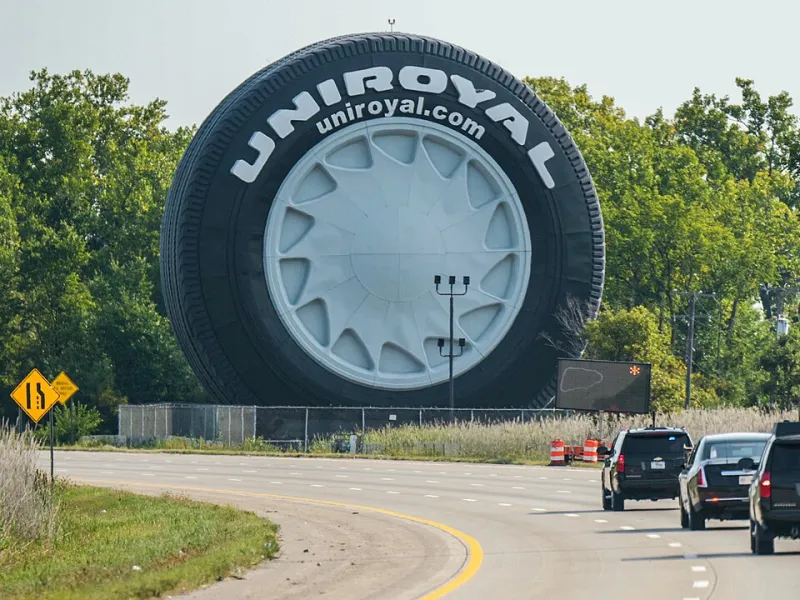
Photo: Adam Schultz, Public domain, via Wikimedia Commons
Somewhere in Cawker City, Kansas, there is a ball of twine so large it has its own weather system. Okay, not really — but at over 40 feet around and still growing thanks to an annual twine-a-thon, it's big enough that people plan entire vacations around standing next to it, squinting, and saying "huh. Neat."
And here's the thing: they're not wrong to do it.
The Attractions That Refused to Die
For decades, the obituary for roadside America has been written annually. The interstate system bypassed the towns. GPS killed the happy accident. Why pull over for a mystery spot when your phone already knows every Dairy Queen within a 40-mile radius?
Except the obituary was premature, because the world's largest collection of mustard tins did not get the memo.
Drive the back roads of Wisconsin and you'll find a museum where you can watch a cow sculpted entirely out of butter (okay, that's the fair, but still). Head to South Dakota and you'll pass a drugstore advertising free ice water with the confidence of a Fortune 500 brand. In Minnesota, the fabled drive-through gopher hole awaits anyone willing to detour off Highway 12.
These places survived not because they adapted, but because they refused to. The gift shop still smells like 1974. The owner still personally hands you your change. There is no app. There is a clipboard.
Meet the Keepers of the Weird
The owners of these attractions are a special breed of American. Many inherited the operation from a parent or — more chaotically — from a stranger who left them the twine in a will. Several are in their seventies and have been answering the question "is it real?" ten thousand times a year since the Nixon administration.
One museum curator we spoke with keeps a guestbook dating back decades, and the entries have evolved from "Stopped by on the way to Denver" to "My therapist told me to do more whimsical things." Progress, of a kind.
The economics are not glamorous. Admission is usually five bucks or free-with-donation. The real money, if you can call it that, comes from the gift shop: magnets, postcards, and novelty items that say things like "I Saw It and Lived." Nobody's getting rich. Everybody's getting by. It's the most American business model imaginable.
Enter the Detour Generation
Here's the twist nobody predicted: Gen Z has discovered roadside attractions and is treating them like content gold. There's a whole corner of TikTok dedicated to rating America's weirdest stops, and a video of someone reacting to a giant fiberglass animal can pull millions of views.
The logic tracks, honestly. When every restaurant looks the same and every skyline is a blur of identical glass towers, a 60-foot cowboy is a radical act of individuality. These kids grew up on algorithmically smoothed content, and now they crave the jagged, hand-painted, slightly-falling-over aesthetic of a roadside wonder built by one guy with a welding torch and a dream.
The attractions have noticed. A few have leaned in with cheeky signage aimed directly at the camera crowd: "Yes, It's Still Weird. No, We Won't Explain It."
The Case for the Detour
There's a real argument that these places matter beyond the photo op. They're often the only reason a small town appears on a map of anyone's consciousness. When the twine ball gets a thousand visitors a month, some of those people buy gas, get a burger, maybe stay the night. For a town of a few hundred people, that's an economy.
So here's your assignment: next road trip, open your maps app, search for the nearest "world's largest" anything, and go. Bring cash. Talk to the owner. Buy the magnet.
The highway will still be there. The twine, miraculously, keeps growing.