Please Don't Bring Up Chapter Three: Inside America's Anti-Book Clubs

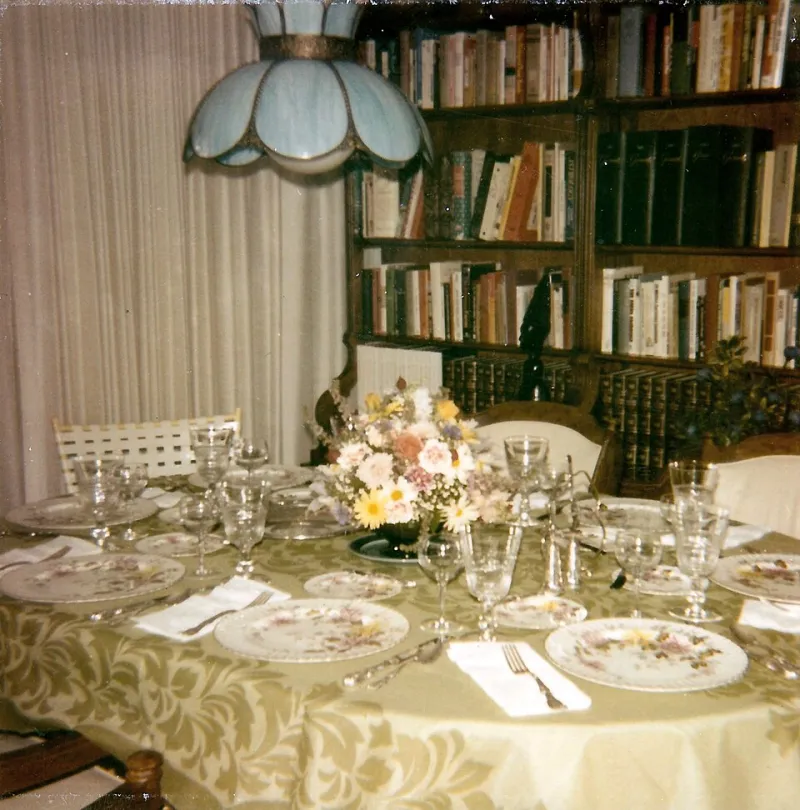
Photo: Jules Verne Times Two, CC BY-SA 4.0, via Wikimedia Commons
On a Thursday night in a suburban living room outside Columbus, Ohio, eight adults are sitting in a circle. There is a plate of nachos. There is a bowl of pretzels shaped like tiny footballs. There is a copy of a literary novel on the coffee table, face down, spine cracked but unread. Nobody mentions it. That is the whole point.
This is an anti-book club. It meets monthly. It has a name, a group chat, and a set of rules that are mostly about what not to do. The rules are simple: bring snacks, bring gossip, do not bring a summary of the reading. The reading is optional. The reading is, in fact, discouraged. The book is a prop, a conversation starter that everyone has agreed not to start.
The Rules Are the Point
Anti-book clubs are not new, exactly. People have been forming clubs around the idea of not doing the thing for years. But in 2026, the format is having a moment. The appeal is obvious: book clubs require homework. Anti-book clubs require only a willingness to sit on a couch and eat something that came from a bag.
The rules vary by group, but they tend to share a spirit. One club in Portland, Oregon, has a 'no spoilers, no summaries, no shame' policy. Another in Austin, Texas, assigns a book each month and then explicitly forbids discussion of it. The book is chosen by a rotating member, which means everyone gets a turn to pick something ambitious and then never read it. The group calls this 'the burden of curation.'
A Low-Stakes Room in a High-Stakes Year
The anti-book club is a reaction to a culture that has made even leisure feel like a performance. Reading has become something to optimize: reading challenges, annual book counts, aesthetically arranged shelves. Even the humble book club can turn into a seminar with wine. The anti-book club says: what if we just hung out?
That sounds simple, but it is not. Americans are lonely, and the solutions offered to us are often expensive, scheduled, or both. The anti-book club is cheap. It is local. It does not require you to have finished the reading, which means it does not require you to have your life together. You can show up in sweatpants. You can show up having read nothing. You can show up and say, 'I had a week,' and someone will hand you a cookie.
The Creative Loopholes
Of course, humans are humans. Give them a rule and they will find a way around it. Some anti-book clubs have developed elaborate loopholes. Members are allowed to discuss the book only if they have not read it and are speculating wildly. Or they can discuss the movie adaptation, which no one has seen either. One group in Denver has a 'one-sentence review' rule: you may say exactly one sentence about the book, and it must be about the cover.
The loopholes are part of the fun. They give the group a shared language, a set of inside jokes that build over months. In a good anti-book club, the book becomes a mascot. It sits on the coffee table, unread, silently presiding over the nachos. Occasionally someone picks it up, reads the back cover, and puts it down again. This is considered a bold move.
Why 'We Didn't Read It' Works
The anti-book club is not anti-reading. Many members are avid readers. They just don't want to turn friendship into an assignment. The phrase 'we didn't read it' is liberating because it removes the possibility of failure. If no one is expected to finish, no one can fall behind. The group is held together not by a shared text but by a shared willingness to show up.
That is a surprisingly strong basis for community. The anti-book club asks very little and gives a lot: a standing date, a low bar, and a room full of people who are glad you came. In a country where social calendars fill up with obligations, a monthly gathering with no agenda can feel like a luxury.
The Snack Economy
The true engine of the anti-book club is the snack table. Members compete, gently, to bring the best thing. There are dips. There are themed crackers. There is usually at least one person who has decided to make a signature dish and will not be stopped. The snacks are not a side note. They are the program.
This is where the club's personality emerges. The Portland group has a strict 'no sad desk snacks' rule. The Austin group once devoted an entire meeting to a nacho bracket. The Columbus group has a running debate about whether pretzels count as a meal. These debates are not trivial. They are the connective tissue of a group that has decided to be together.
How to Start Your Own
Starting an anti-book club is easy. Pick a night. Pick a book nobody has to read. Invite people you like, or people you would like to like. Make a group chat. Bring snacks. Do not prepare discussion questions. If someone accidentally starts talking about the book, gently redirect them to the nachos.
The best anti-book clubs are the ones that realize the book is beside the point. The point is the Thursday night. The point is the pretzels. The point is the friend who texts, 'I didn't read it either,' and knows that is not a confession but an invitation.