Unplugged and Unhinged: The Americans Gleefully Divorcing Their Smart Homes
Somewhere in suburban Columbus, Ohio, a man named Derek is standing in his kitchen holding a Philips Hue smart bulb like it personally wronged him. Because, in his view, it absolutely did. Last Tuesday, it took forty-five seconds — forty-five full, unacceptable seconds — for the light in his bathroom to respond to a voice command. He said "Hey, turn on the bathroom light." The bathroom remained dark. He said it again. Nothing. He walked into the bathroom, felt around for the wall switch that he had specifically paid a contractor to relocate because the app was supposed to handle everything, and stood there in the dark having what he later described as "a spiritual reckoning."
The bulb is now in a shoebox under the sink. Derek bought a $1.49 replacement from the hardware store. It works every single time.
The Dream They Sold You
Remember when smart homes were going to save us? Around 2015, every tech company with a Bluetooth chip and a venture capital check was promising a seamlessly orchestrated domestic paradise. Your thermostat would learn your schedule. Your locks would know your face. Your refrigerator — your actual refrigerator — would monitor your groceries and send you helpful little reminders when you were running low on Greek yogurt.
And Americans, bless their optimistic hearts, bought in. Ring doorbells went on every porch. Nest thermostats got installed over perfectly functional manual ones. Amazon Echos multiplied like digital rabbits until there were three in a single household and they were all listening to each other across rooms in some kind of low-stakes surveillance relay race.
The pitch was convenience. The reality, for a growing and increasingly vocal segment of the population, has been something closer to an elaborate, expensive inconvenience wrapped in a glossy app interface.
The Backlash Is Real and It Is Petty in the Best Way
What's happening now isn't just a few grumpy Luddites griping on Reddit, though there is plenty of that and it is extremely entertaining. It's a genuine, grass-roots unraveling of the smart home dream. People are yanking out their connected devices and replacing them with dumb, analog, beautifully uncomplicated alternatives — and they're treating the whole process like a personal liberation movement.
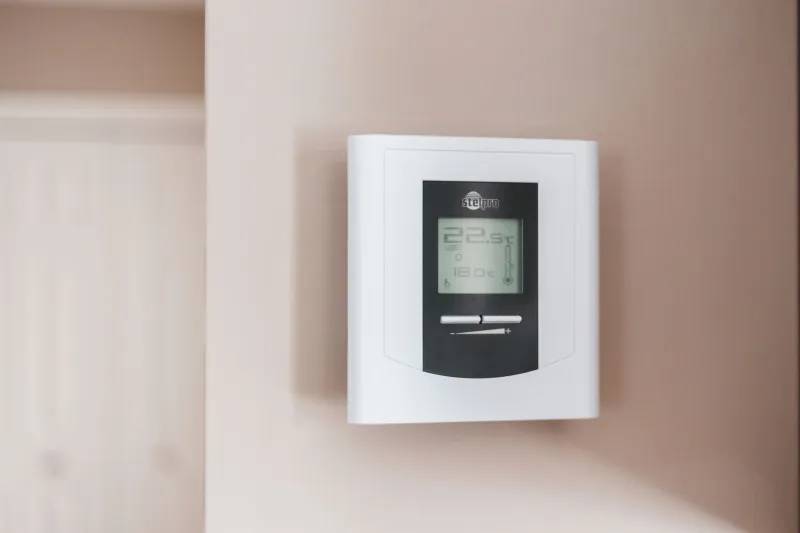
Take Sandra, a graphic designer in Austin who spent three years managing a fully integrated smart home ecosystem involving four different apps, two separate hubs, and a mesh Wi-Fi network she had to restart every time it rained. "I had a thermostat that needed a software update to change the temperature," she says. "An update. To make my house warmer." She has since replaced it with a $28 programmable thermostat from Home Depot. It has four buttons. She has never once wanted to throw it through a window.
Or Marcus in Denver, who removed his smart lock after discovering that the companion app had started sharing usage data with a third-party analytics company he'd never heard of. "My door was narcing on me," he explains, with the calm energy of someone who has already processed the absurdity. "I just wanted to unlock my house. I didn't want my comings and goings sold to whoever buys that kind of thing." He now has a deadbolt. It costs nothing per month to operate. It has never sent him a notification.
The Refrigerator Notification Is Where Everyone Draws the Line
If there is a single moment that seems to crystallize the backlash better than any other, it is the refrigerator notification. Samsung, LG, and a handful of other manufacturers have spent years building smart fridges that can send you updates about your food situation. And while this sounds helpful in theory, in practice it manifests as your phone buzzing at 11 p.m. to inform you that the door was left open for eight seconds, or that your water filter is "approaching the end of its recommended service period," or — in one real, documented, deeply upsetting case — that you have been invited to register your appliance for a loyalty program.
The fridge notification is not a feature. The fridge notification is a symptom. It is the moment when the promise of ambient, invisible technology reveals itself to be the opposite: loud, intrusive, and weirdly needy. Nobody wants a relationship with their refrigerator. They want cold food and ice.
Dumb Is the New Smart
The people abandoning their connected ecosystems aren't doing it out of fear, exactly, though privacy concerns are absolutely part of the conversation. They're doing it because the math stopped adding up. The time saved by automating your lights is erased the first time you have to troubleshoot why your living room has decided to stay at 40% brightness indefinitely. The security offered by a video doorbell is complicated by the fact that the footage lives on a server you don't control.
There's also something almost philosophical happening here. Smart home technology sold itself as a reduction of friction, but for a lot of people it introduced a new, more insidious kind of friction: the friction of maintenance, of updates, of compatibility issues, of wondering what your thermostat is quietly uploading to the cloud at 3 a.m.
The dumb appliance, by contrast, asks nothing of you. It does not need to be rebooted. It does not have a subscription tier. It does not send push notifications. It just does the thing it was built to do, quietly and without drama, which turns out to be a genuinely radical quality in 2024.
The Joy of Opting Out
What's striking about the people who've made this switch is how cheerful they are about it. This isn't a movement driven by dread or paranoia. It's driven by the specific, low-key glee of simplifying something that had been made unnecessarily complicated. Derek, back in Columbus with his $1.49 light bulb, describes flipping his bathroom switch for the first time in years with the unironic satisfaction of a man who has just remembered what immediate cause and effect feels like.
"It's a light switch," he says. "You flip it. The light comes on. Every time. Zero lag. Zero app. Zero firmware."
He sounds like a man who has found religion. The religion is just a light switch. And honestly? That tracks.
Somewhere, a smart refrigerator is composing a notification about his Greek yogurt. He will never receive it. He has never been happier.