Baggy, Boxy, and Absolutely Unrepentant: The Americans Dressing Like Their Clothes Belong to Someone Else
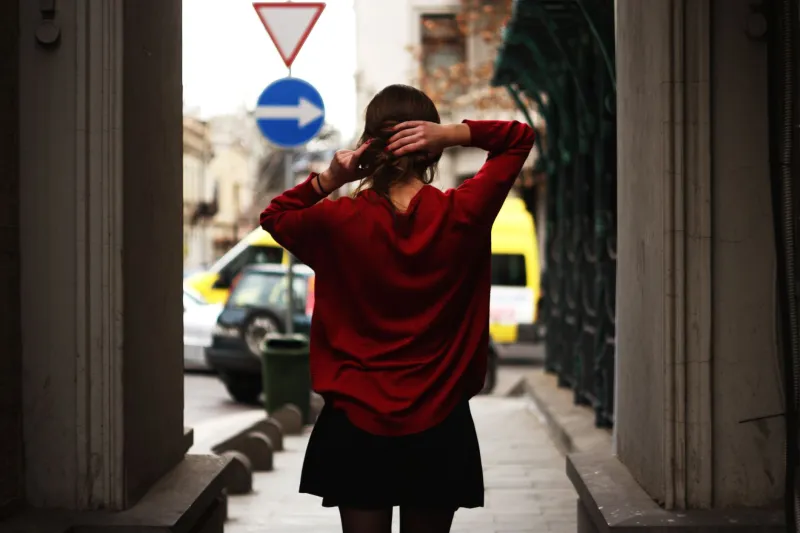
There is a person near you — maybe a coworker, maybe your niece, maybe the guy ahead of you at the Trader Joe's checkout — wearing a shirt that appears to have been manufactured for a different species. The shoulders hang somewhere around the elbows. The hem grazes the knees. The pants, if we can call them that, billow like a ship's sail catching a firm Atlantic wind. And yet that person looks, inexplicably, completely unbothered. Possibly even cool.
This is not a wardrobe malfunction. This is a lifestyle choice. This is the Great Closet Revolt, and it is absolutely, gloriously out of control.
The Death of "Flattering" (And Good Riddance)
For roughly four decades, the dominant gospel of American fashion advice was simple: wear what flatters your body. Tuck in your waist. Elongate your legs. Create the illusion of curves, or the illusion of no curves, depending on which magazine you were reading that month. The word "flattering" was deployed like a weapon, usually aimed directly at anyone who had the audacity to wear something that didn't make them look like a department store mannequin.
Then Gen Z showed up, looked at all of that, and said: hard pass.
The shift didn't happen overnight, but somewhere in the early 2020s, something cracked. Skinny jeans — the reigning monarchs of the fitted silhouette — got absolutely roasted on TikTok. Not because they were uncomfortable (though, famously, they were). But because the whole premise of engineering your outfit around making your body look a certain way started to feel exhausting. Like homework. Like a part-time job you never applied for.
In their place rose the oversized hoodie, the wide-leg trouser, the boxy blazer worn three sizes up, and the cropped baby tee worn ironically under a flannel that could double as a small tent. Proportion became something to mess with rather than optimize. And a whole generation collectively exhaled.
The Psychology of the Deliberate Mismatch
Here's where it gets genuinely interesting, because this isn't just laziness dressed up as fashion (though, to be fair, some of it definitely is, and that's also fine). There's actual psychological weight behind the decision to stop dressing for other people's eyeballs.
Fashion researchers and cultural critics have noted that intentionally ill-fitting clothing functions as a kind of armor — or, more precisely, an anti-armor. It signals that the wearer has opted out of the performance. The traditional logic of fashion says: dress to impress, dress to attract, dress to signal status through precision and polish. The oversized-everything crowd is essentially replying: what if I just dressed to exist?
There's also a class element that doesn't get talked about enough. For a long time, "well-fitting" clothes were expensive clothes — tailored, constructed, deliberately cut to specific measurements. Deliberately sizing up or down, mixing proportions, and thrifting pieces that were never meant to be worn together is, in part, a rejection of the idea that fashion credibility requires a certain kind of spending. The coolest outfit in the room might be a $6 Goodwill find worn with $200 sneakers and absolutely zero apologies.
Oversized Is Not One Thing
It's worth pointing out that "clothes that don't fit" contains multitudes. This is not a monolith.
There's the Grandpa Chic contingent — people hunting for massive, boxy knitwear that looks like it was last worn by someone watching a 1987 college football game. There's the Skater Influence crowd, wearing jeans so wide at the leg opening they're technically a skirt. There's the Y2K Revival happening in real time, with tiny low-rise cuts and cropped silhouettes that technically fit but are making a very specific, very chaotic point about proportion. And then there's the pure thrift-store maximalist, who is wearing four different patterns simultaneously and somehow making it work because they have completely transcended your concern.
All of these are united by a single philosophical thread: the fit is not the point. The vibe is the point.
"I Stopped Dressing for the Mirror"
Talk to people who've made this shift and a pattern emerges pretty quickly. The common thread isn't a specific aesthetic — it's the feeling of having dropped something heavy.
One 26-year-old in Chicago described spending years trying to find the "right" jeans, meaning jeans that made her look a specific way in a specific mirror. Then she bought a pair of wide-leg cords from a thrift store in Wicker Park that were two sizes too big, belted them at the waist, and wore them to a party. People asked where she got them. She hasn't bought a fitted pair of pants since.
A 32-year-old in Portland described his closet as "a collection of things that technically belong to a much larger man," which he assembled over about eighteen months of intentional thrifting. He reports that getting dressed in the morning now takes four minutes and produces zero existential dread. This is not a small thing.
The Brands Caught Scrambling
Fashion brands, to their credit, noticed this happening and did what fashion brands always do: they immediately tried to sell it back to you. "Relaxed fit." "Oversized silhouette." "Intentionally roomy." Entire product lines materialized around the concept of selling you a shirt that looks like you accidentally bought it in the wrong size, for $85.
The irony is thick enough to eat with a spoon. The whole appeal of the movement is its rejection of the idea that you need to buy the right thing. And yet here are the brands, helpfully offering to sell you the right wrong thing. Some people buy these. Some people find this hilarious. Most people do both.
The truly committed just go to the thrift store, which has been having an absolutely unhinged few years as a result of all this.
The Liberation Is Real, Actually
It would be easy to write this off as a trend — something that'll get replaced by skintight neon in eighteen months when the pendulum swings back. Maybe it will. Fashion is a wheel and the wheel keeps turning.
But there's something underneath this particular moment that feels less like a trend and more like a renegotiation. A generation that grew up being told to dress for their body type, to find their most flattering angle, to present themselves as optimized — is quietly deciding that optimization is overrated. That dressing like you genuinely don't care what anyone thinks is, paradoxically, one of the most deliberate style choices you can make.
Your jeans don't have to hug anything. Your shirt doesn't have to tuck. The shoulders on your blazer can live wherever they want.
The clothes don't fit. The people wearing them have never looked more comfortable in their lives.