Silence Is the New Status Symbol: The Americans Going Rogue by Turning Off Every Single Notification
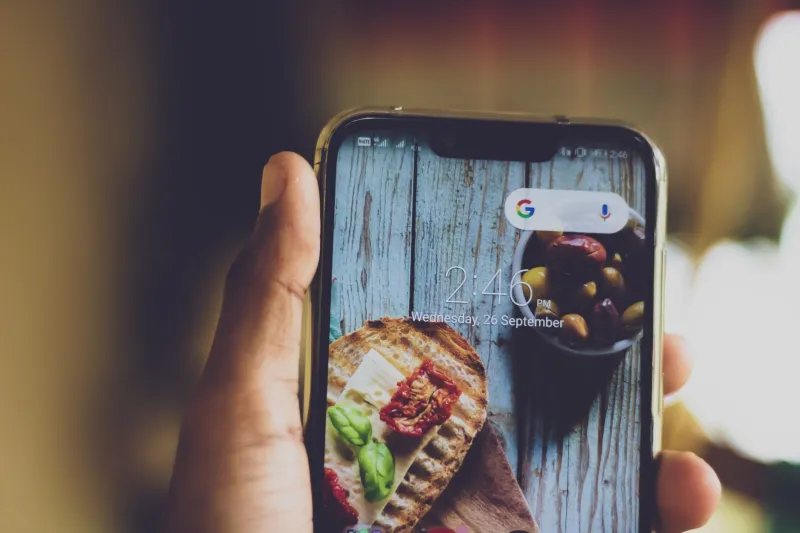
There is a particular kind of person emerging across America right now. You've probably met one. They seem unnervingly calm. They don't flinch when they set their phone face-down on a restaurant table. They don't compulsively glance at their wrist every forty-five seconds. And when you ask if they saw your text, they smile serenely and say, "Oh, I don't really get those anymore."
This is not a person who has achieved enlightenment. This is a person who went into their phone settings at 11 p.m. on a Tuesday, spent two hours disabling literally every notification they could find, and woke up the next morning feeling like they'd escaped a cult.
Welcome to the Great Notification Purge — the quietly unhinged lifestyle trend where Americans are systematically silencing their devices and, by most accounts, absolutely losing their minds with relief.
How We Got Here (Or: The 97 Things Beeping at You Right Now)
Let's take a quick inventory. Your phone is currently trying to tell you about a sale at a store you visited once in 2021. It wants you to know that someone liked a photo you posted in March. It has opinions about the weather. It is very concerned that you haven't opened a language-learning app in six days. It would like you to rate a burrito place. It has breaking news. It always has breaking news.
The average American receives somewhere between 65 and 80 push notifications per day, depending on which study you believe and how deeply you want to be depressed. That's a notification roughly every twelve minutes during waking hours — a relentless, democratized drumbeat of digital urgency that our brains were genuinely not built to process.
And yet, for years, most of us just... accepted it. We flinched. We checked. We doom-scrolled the follow-up content the notification dragged us into. We looked up forty-five minutes later, vaguely unsure what we'd been doing before the phone demanded our attention.
Then something snapped.
The Purge, Described by People Who Survived It
Denise, a 34-year-old marketing coordinator from Columbus, Ohio, describes her notification purge as "the most aggressive thing I've ever done to myself that wasn't a juice cleanse."
"I sat down one night and went through every single app," she says. "Emails, off. Instagram, off. News apps — all four of them, off. Even my calendar. I turned off the calendar reminders because I figured I'd just... remember things."
Did she remember things?
"I missed one dentist appointment. But I also stopped having that thing where your chest tightens every time your phone lights up. So I'm calling it a net win."
Then there's Marcus, 41, a software developer from Austin who took a more surgical approach. He kept notifications for exactly two things: phone calls from his mom and his bank's fraud alerts. Everything else got the axe. "The first week felt like withdrawal," he admits. "I kept picking up my phone expecting it to have something for me and it just had... nothing. It was like opening the fridge hoping for leftovers and finding a single sad lemon."
But by week three? "I started thinking in longer sentences again. I'm not kidding. I noticed I could hold a thought for more than ninety seconds without needing to check something."
The Psychology of the Ping (And Why Turning It Off Feels Illegal)
Here's the uncomfortable truth that the apps don't advertise: notifications aren't designed to help you. They're designed to pull you back. Every buzz, badge, and banner is a tiny engineered hook — a micro-dose of urgency meant to interrupt whatever you're doing and redirect your attention toward a platform that monetizes that attention.
Psychologists have a term for what happens when you're anticipating a notification: "variable reward." It's the same mechanism that makes slot machines so effective. You don't know when the reward is coming, so you keep checking. The phone becomes a slot machine you carry in your pocket and consult approximately 96 times a day, which is the actual average, and which should probably be on a warning label somewhere.
Disabling notifications, then, isn't just a productivity hack. It's opting out of a psychological system that was never designed with your wellbeing as the primary objective. Which is why it feels, to so many people who do it, weirdly radical. Almost transgressive. Like jaywalking, but for your nervous system.
The Unexpected Side Effects Nobody Warned You About
Going notification-free is not without its complications, and anyone who tells you otherwise is probably trying to sell you a wellness course.
For starters, there's the social renegotiation. When you stop responding to texts within four minutes, people notice. They will assume you are dead, furious, or both. You will have to explain — multiple times, to multiple people — that you are fine, you just check your messages when you feel like it now, like some kind of 1987 answering machine situation, and yes, this is intentional.
There's also the strange grief of realizing how much of your day was structured around your phone's demands. Without notifications pulling you toward the device, you have to decide, on your own, when and why to pick it up. This sounds simple. It is not simple. It turns out a lot of us have been using our phones as a way to avoid sitting still with our own thoughts, and when the phone stops summoning you, those thoughts are right there, waiting, like a dog that knows you're home.
But then — and this is the part that converts people — something shifts. You start noticing things. Not in a pretentious, "I walked outside and saw a bird" way, though that does happen. You notice that you're finishing books. That you're actually listening during conversations instead of half-composing a response to a Slack message in your head. That boredom, which you'd been frantically medicating with content, is actually kind of interesting when you let it breathe.
Is This a Movement or Just a Very Long Weekend?
The notification purge has been building quietly for a couple of years now, fueled by tech-burnout discourse, a growing skepticism toward social media platforms, and the general vibe that something has gone profoundly sideways with our relationship to our devices.
It's not minimalism, exactly. It's not a full digital detox — most people doing this still use their phones constantly. They're just using them on their own terms, at times they choose, rather than sprinting toward every digital summons like a golden retriever who heard a crinkle.
And maybe that's the real appeal. In a world that has engineered approximately one thousand ways to demand your attention at any given moment, the decision to simply not respond — to let the little red badges pile up unacknowledged, to exist in a pocket of self-made quiet — feels less like an absence and more like a declaration.
Your phone can wait.
You, apparently, cannot be reached right now.
And somehow, that's the most powerful thing you've done all week.