Please Connect to 'Drop It Like It's Hotspot': A Field Guide to America's Router Confessions
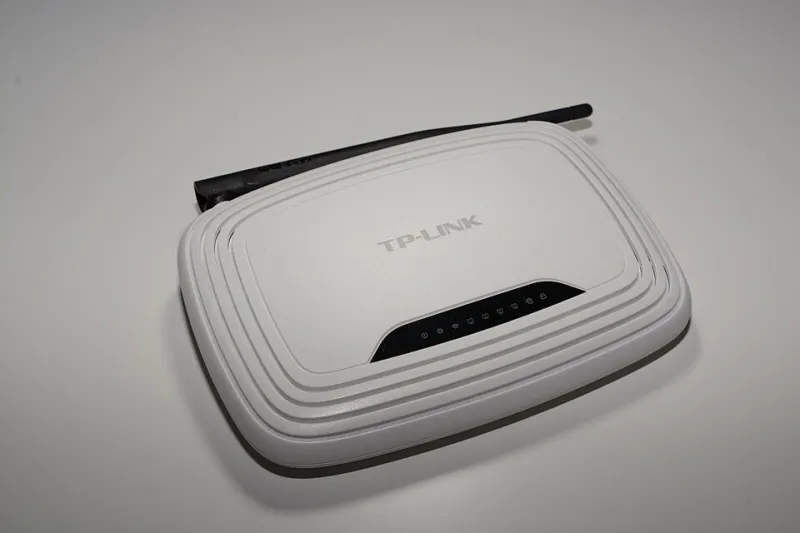
Photo: Hayden Schiff, CC BY 4.0, via Wikimedia Commons
Somewhere in America right now, a router is blinking in a closet and broadcasting a name no manufacturer intended. It is not NETGEAR37. It is not linksys. It is 'Drop It Like It's Hotspot,' and it is the closest thing that household has to a public statement of values.
We talk a lot about the death of the front porch, the disappearance of spontaneous neighborly conversation, the way everyone retreats into screens. But look at your phone's Wi-Fi menu. There it is: a crowded little bulletin board of jokes, grievances, movie quotes, and elaborate bits that require three neighbors and a shared history to decode. The router is not a utility. It is a marquee.
The Router Is the New Front Porch
A Wi-Fi network name, technically an SSID, is supposed to be a label. In practice, it is a flag. It says: we live here, we have a sense of humor, we would like you to know that we are not boring, and also please keep your leaf blower away from our bedroom window.
This is a surprisingly intimate form of broadcast. You do not have to knock. You do not have to make eye contact. You can be witty at a distance, then retreat to the couch with a snack. In a country that has made an art of friendly distance, that is an irresistible format. The default name is surrender. The custom name is a personality test with a signal radius.
A Preliminary Taxonomy of American Wi-Fi Names
The names tend to fall into recognizable species. Consider this an incomplete field guide.
- The passive-aggressive broadcast. 'PleaseStopMowingAt7AM' is not a network; it is a homeowner association complaint with a password. 'GuestWiFi_ButNotForYou' has the energy of a welcome mat that has been legally advised to remain silent.
- The pop-culture time capsule. 'The LAN Before Time,' 'Wu-Tang LAN,' 'No More Mr. WiFi' and 'That's What She SSID' are dad jokes wearing a router. They signal a household that has not fully moved on from 2012, and is at peace with that.
- The inside joke. 'The Ministry of Silly Watts' or 'Never Gonna Give Up Your IP' means nothing to a newcomer and everything to the four people who live there. This is the router equivalent of a family handshake.
- The bureaucratic cosplay. 'FBI Surveillance Van' is the classic, but the form has evolved: 'CDC Mobile Unit,' 'HOA Compliance Office,' 'IRS Field Office.' The joke is always the same: make the neighbors glance out the window, then feel silly.
- The sincere weirdo. 'The Shire,' 'Mordor Annex,' 'The Batcave' and 'Our House, Please Don't Hack Us' are not trying to be cool. They are trying to be a home.
Why We Do This to Ourselves
A router name is a rare kind of public speech. It is visible to anyone within range, but it is not quite a conversation. You don't have to see the neighbor. You don't have to wave. You can make a joke and then go back to pretending you are not home when the doorbell rings.
It is also free. You cannot control the weather, the school board, or the fact that someone on your street has decided that leaf blowers are a daily ritual. You can control the six to thirty-two characters that appear on every phone in the cul-de-sac. That is not nothing. It is a small, glowing act of self-determination.
The Neighborly Arms Race
In any given subdivision, there is usually one household that treats the Wi-Fi menu like a competitive sport. Their network is called something like 'Loading...' or 'Get Your Own WiFi' or 'PrettyFlyForAWiFi.' Then the house across the street responds with 'PrettyFlyForAWiFi_2' and the whole block enters a cold war of puns.
This is mostly harmless. It is also deeply revealing. The names tell you who has children, who has a grudge, who just finished a Marvel marathon, and who has decided that their router is the only coworker they can joke with before 9 a.m. The Wi-Fi list is a census of local humor.
A Brief Note on Security, or Why 'FBI Surveillance Van' Is Not a Password
Every few years, someone points out that a funny network name will not protect you from a determined teenager with a laptop and too much time. This is true. 'FBI Surveillance Van' is not a security strategy. It is a bit. A good bit, possibly, but still a bit. The real protection is a strong password and firmware updates, not a name that makes your neighbor's uncle chuckle.
Still, the bit persists because it works on a social level. It makes the invisible infrastructure of modern life briefly visible. It reminds us that the internet is not only in the cloud. It is also in the hallway, on the shelf, behind the ugly ceramic bowl where you keep the spare keys.
The Poetic Default
Not every router name needs to be a masterpiece. Some of the best are quietly strange: 'The House of Wet Towels,' 'Do Not Connect,' 'This Is Not a WiFi.' They suggest a household that has given up on being impressive and decided to be honest instead.
So the next time you open your Wi-Fi settings, take a moment. You are not just looking at a list of networks. You are reading the neighborhood's collective diary, written in six-word bursts, blinking softly through the drywall. Choose your own name carefully. It will be out there longer than you think.